History
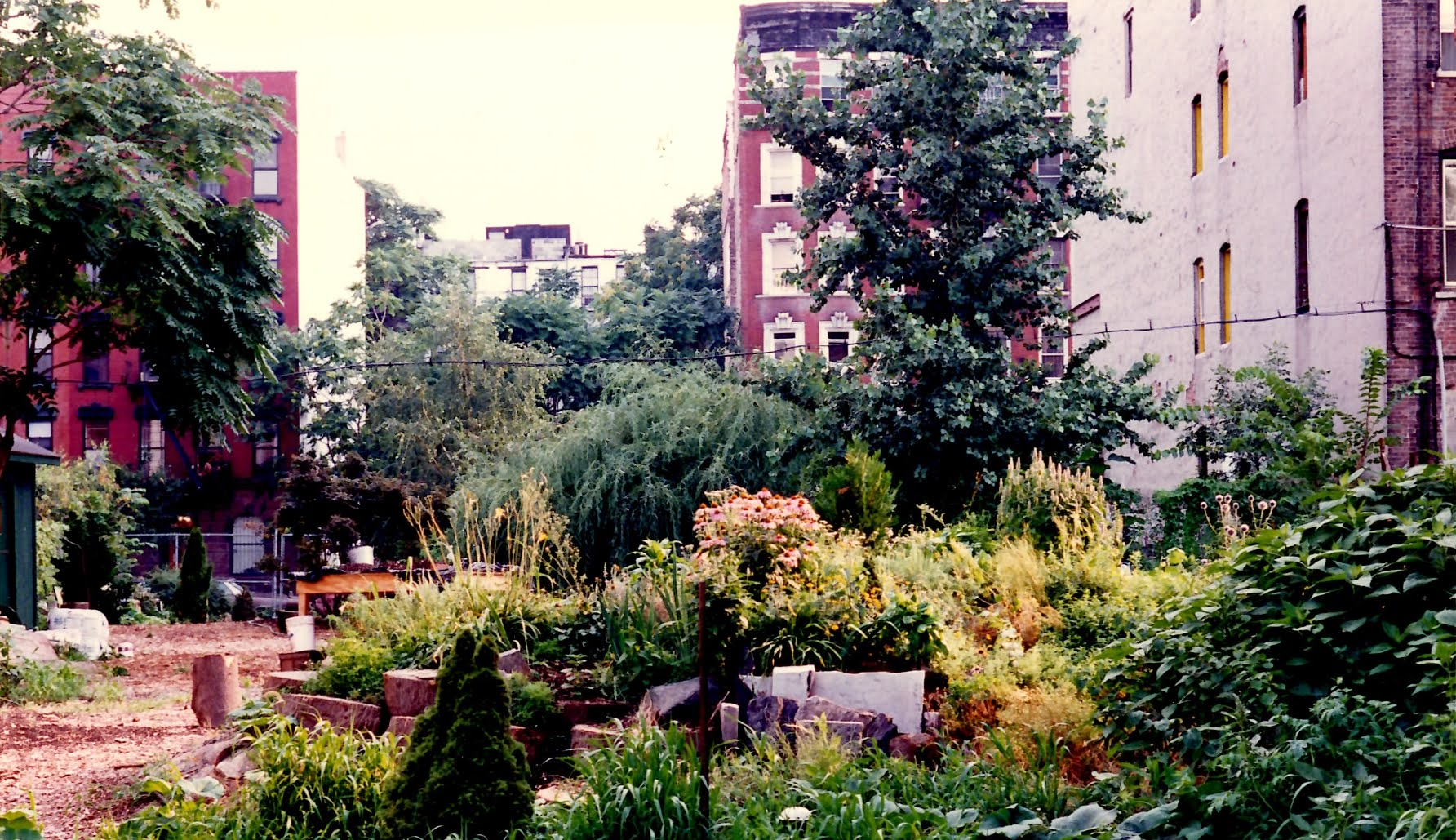
The Clyde Romero Memorial Garden in full bloom in 1995.
1986–1987: A People-Powered Beginning
When Christine Datz and Clyde Romero met in 1986, they shared a deep passion for the environment and improving their neighborhood. With a people-powered approach to sustainability they launched the Lower East Side Ecology Center in 1987.
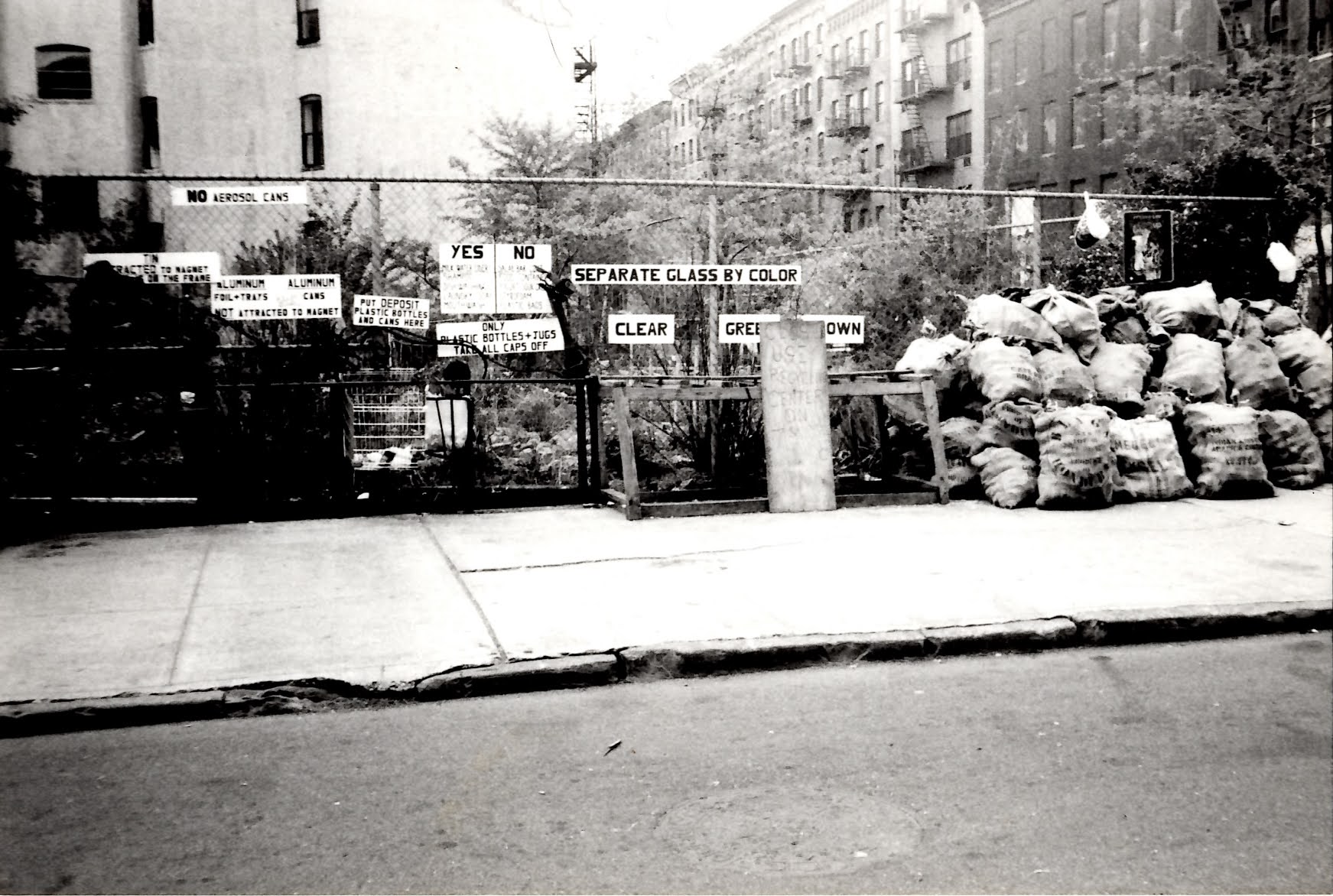
Our first recycling drop off at the 6th Street & Avenue B Garden
1987–1990: Early Recycling & Composting
Six years before New York City implemented a citywide recycling program, the Ecology Center was already leading the way. We established a community drop-off site at the 6th Street and Avenue B Garden, where locals could recycle paper, metal, glass, and plastic.
By 1990, we leased four city-owned, rubble-filled lots on East 7th Street. These 15,000 square feet became home to one of the city’s first community composting programs. Neighbors dropped off fruit and vegetable scraps, while volunteers collected food waste from health food stores and restaurants.
Over time, we transformed the lots into an attractive garden, demonstrating how the composting of food waste can improve quality of life and ecology on a community level. Now known as the Clyde Romero Memorial Garden, it is a 6,000 square-foot protected community garden.
1994-1998: Growing Beyond the Lower East Side
In 1994, we expanded composting efforts to the Union Square Greenmarket, the largest farmer’s market in the city, bringing urban composting to the forefront of public awareness.
To accommodate increased food scrap collection, we moved processing operations to East River Park in 1998. There, we not only scaled our composting efforts but also took on stewardship of garden beds throughout the park, inviting volunteers to help care for the space.
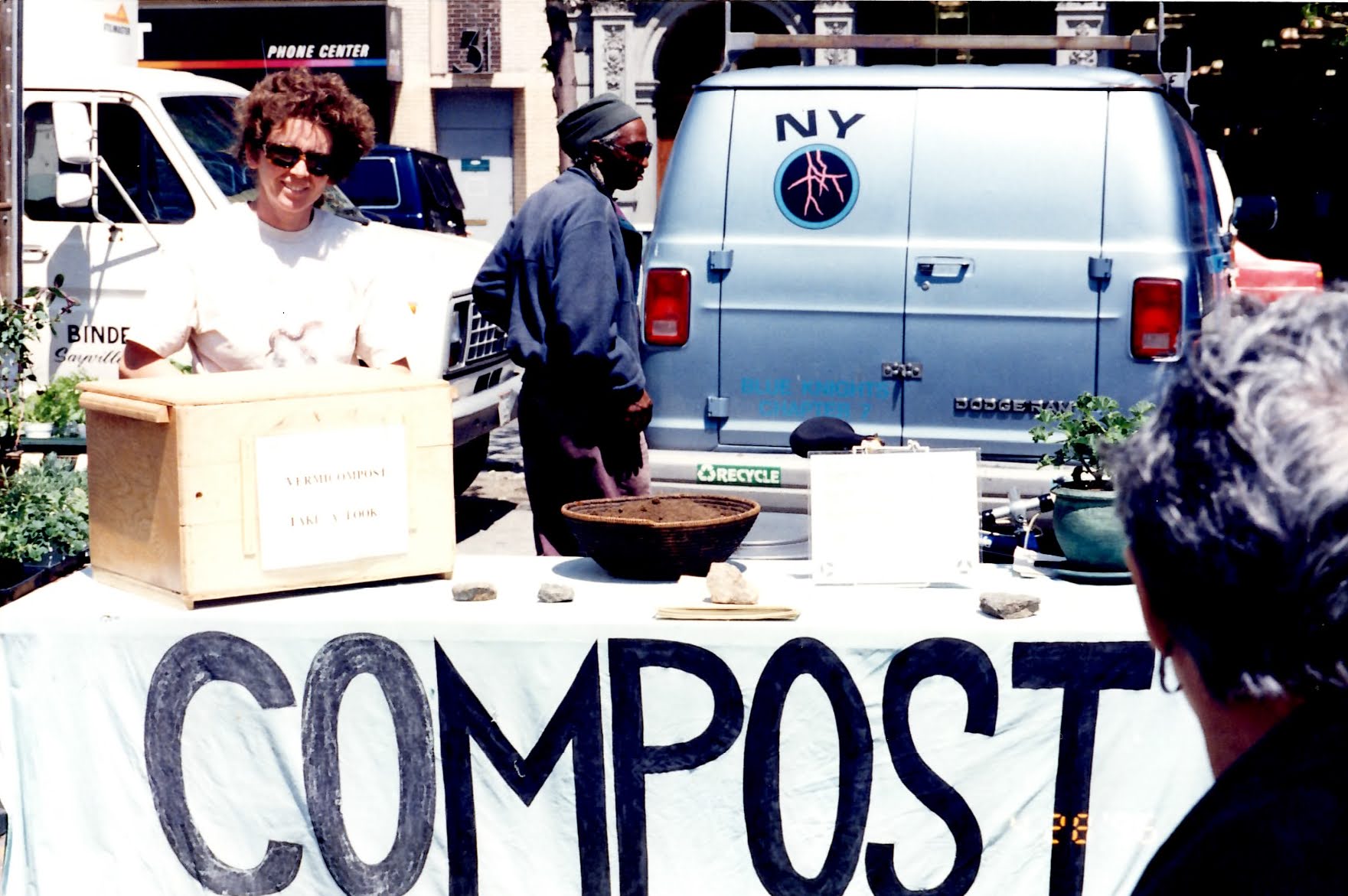
Christine and Clyde at the Union Square Greenmarket in 1998.
2012: Recovery and Resilience
After Superstorm Sandy struck in 2012, we planted over 5,000 native plants in East River Park, helping to restore the ecosystem and create an oasis for both people and wildlife.
2012-2020: The E-waste Warehouse Era
From 2012 to 2020, the Ecology Center operated the Gowanus E-Waste Warehouse, a 10,000-square-foot facility that provided e-waste recycling, a ReUse Store, and a prop library for artists and educators.
This hub of reuse and sustainability became a community staple until its closure in 2020 due to development pressures. We continue to offer pop-up e-waste recycling events across the city and are exploring ways to reopen a permanent drop-off site and reuse center.
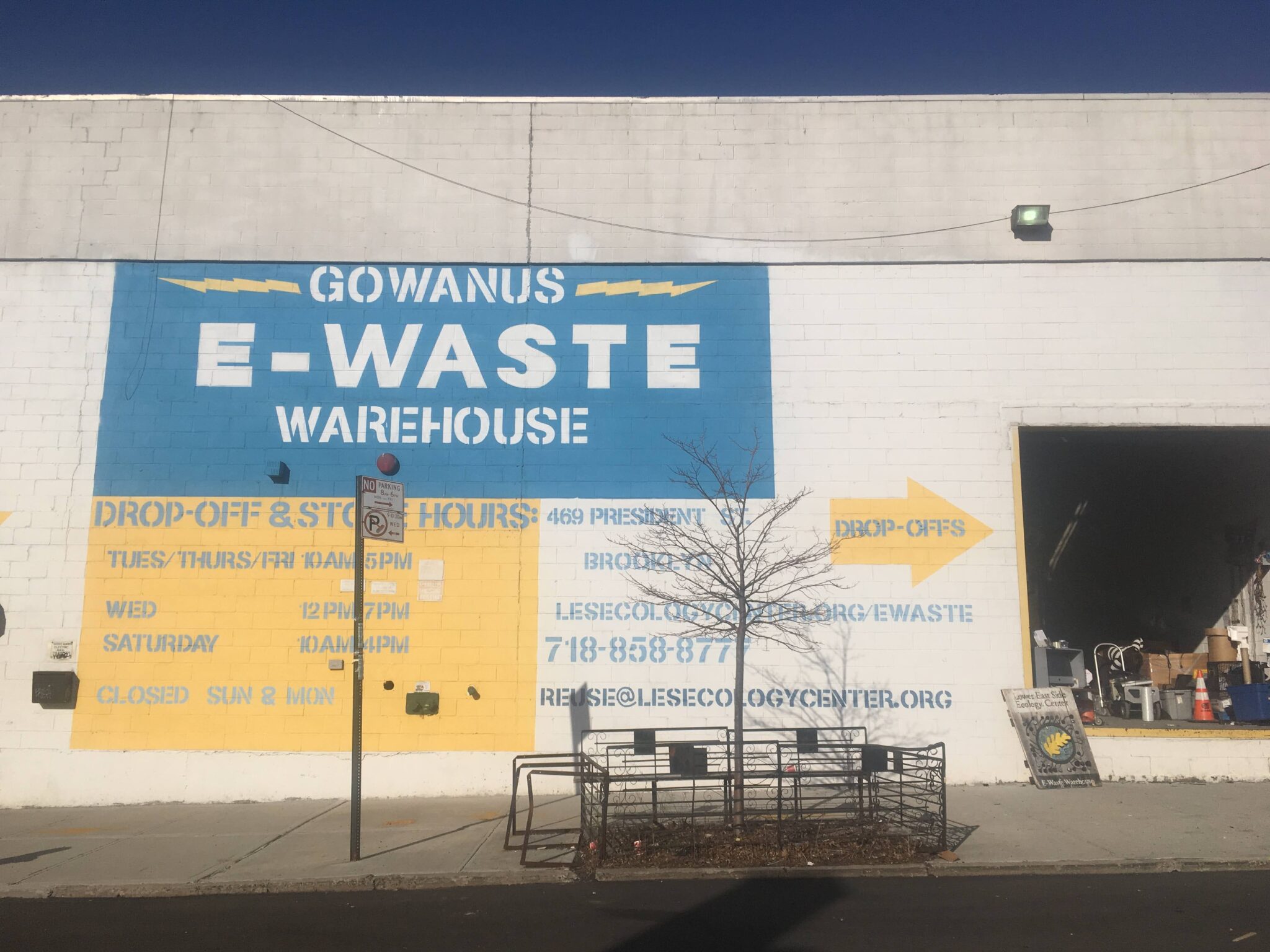
The Gowanus E-waste Warehouse in operation from 2012–2020.
2021: Adapting to Change
In 2021, construction began on the East Side Coastal Resiliency Project (ESCR), closing much of East River Park for critical flood protection upgrades (projected completion in 2027). As a result, we had to relocate all of our programs from the park and adapted our operations to meet this challenge.
Through strong community partnerships and a flexible, mission-driven approach, we sustained our work during this temporary transition. While East River Park has been under construction, we’ve expanded our stewardship efforts to include Tompkins Square Park, Pier 42, and other nearby green spaces. We continue to care for public land and engage volunteers across the neighborhood.
2021-2023: Training the Next Generation
In 2021, we launched the Food Justice Program in partnership with Henry Street Settlement. This initiative created an educational and food-producing garden that connects food access to our composting efforts by completing the food cycle from soil to table and back.
In 2023, we launched a Horticulture Training Program for youth in partnership with Henry Street Settlement and the Lower Eastside Girls Club. This eight-week program provides stipends to participants, offering hands-on training in environmental stewardship, community gardening, and sustainability.
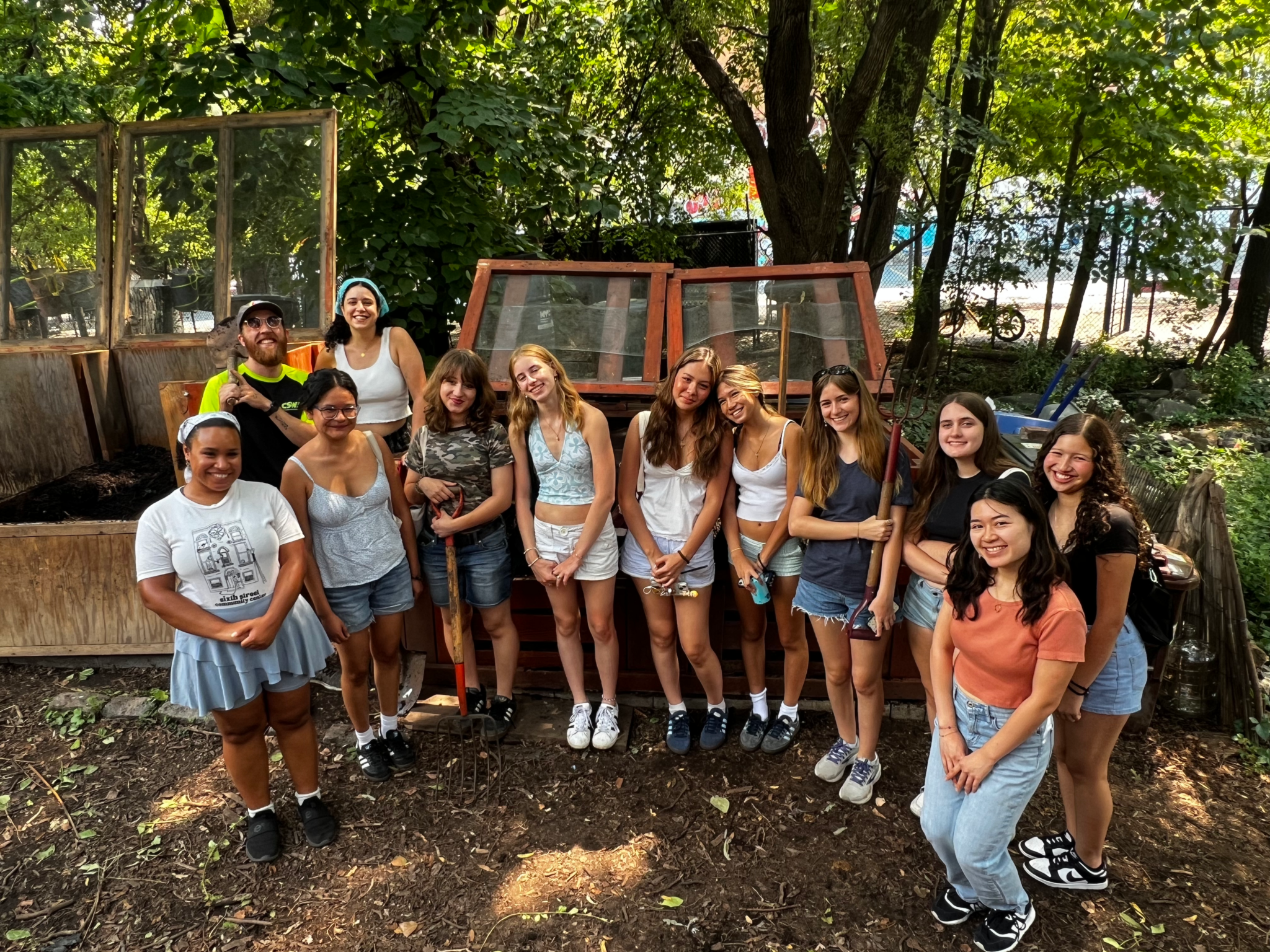
Today: 35+ Years of Urban Ecology Leadership
More than three and a half decades after launching our first programs, the Lower East Side Ecology Center continues to lead the way in sustainability. We remain committed to:
- Developing community-based models of urban ecology
- Promoting equitable, closed-loop systems to manage waste
- Creating inclusive spaces for learning, collaboration, and action
From composting and e-waste to environmental education and stewardship, we’re building a more just, resilient, and greener New York City.