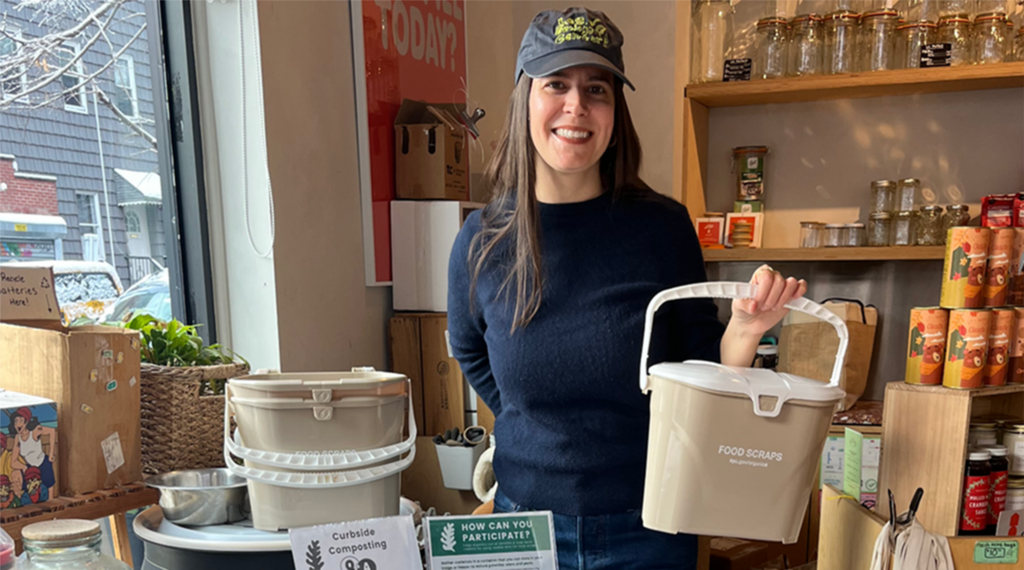
Curbside Composting Q & A

LES Ecology Center is working to support the NYC Department of Sanitation’s citywide Curbside Composting program. This service is available across the city and food scrap separation from trash is now mandatory for all residential buildings. Come join our virtual Curbside Composting Q&A sessions where our Outreach Team explains how the program works, the environmental benefits, and how participation can help avoid Sanitation fines and reduce pests!

Upcoming virtual sessions will take place on:

FAQs

FAQs

What gets composted?

All food things (meat, dairy, bones, greasy food, fruits, veggies, eggshells, coffee grinds, teabags, ALL of it), food-soiled paper (napkins, paper towels, delivery boxes), and plant waste (flowers, leaves, twigs, soil). NO pet waste/bedding/litter, toilet paper or bathroom hygiene products. Clean paper, such as newspaper, office paper, magazines, brown paper bags and cardboard continues to be recycled separately and beverage cartons continue to go with plastic and metal recyclables.

How do residents compost?

Food scraps should only be dropped in a lidded bin of 55-gallon or less capacity that is lined with a clear plastic bag. It is important that the bin lid is securely shut after each use. To transport separated food scraps to collection bins, plastic or paper bags may be used and dropped into the collection bins, they do not need to be emptied. A machine is used in the composting facilities to separate compostable materials from plastic bags. Please do not use any black trash bags to line your bin.

Where can I find my curbside composting bins?

Buildings of 4+ units must provide a clearly-marked central collection area for residents. Building leadership can determine where resident collection occurs, how it is accessed, and what additional steps residents must take (i.e. each resident bagging their scraps in their home first).

When does the Department of Sanitation collect?

Curbside collection occurs on recycling day year-round. The securely latched, closed bin should be placed curbside the evening prior to the building’s collection day. Tying the bin bag closed prevents spills and deters pests. Only leaf and yard waste may be placed curbside in clear plastic or paper bags alone. If there are food scraps mixed with the leaf and yard waste, it all must be placed in a bin.

Why is NYC mandating food scrap separation?

Food scraps in the regular trash get buried in landfills that generate uncontrolled releases of methane, contributing to climate change. Landfills and waste transportation also negatively affect communities in which they are located. Source-separated food scraps get turned into compost, which is used to rebuild our urban soil, mitigate stormwater runoff, and help community gardens to grow fresh healthy produce for their communities. Some portion of food scraps collected are used to generate methane gas under controlled conditions in the city’s wastewater treatment plants for heating homes and creating electricity for buildings.

What about rodents and pests?

The food waste going into the compost bin is the same food waste that goes into garbage bins. As with garbage bins, compost bins should be securely closed after each use to prevent pests.

What about odors?

To prevent odors in apartments, bag food scraps in a bin with a lid. Refrigerating and freezing food scraps are also options for controlling odor. Adding paper towels and other paper products will help mitigate smells by soaking up liquids. Encouraging each unit to tightly close bagged food scraps before putting them in the central collection bin will also greatly reduce odors.

Are there fines for not separating compostable materials?

Starting April 2025, property owners may receive a fine if compostable material is not separated from trash, for buildings with 30+ units that have received 3 or more violations and/or fines. Fines for not separating compostable waste are scheduled to go into effect in January 2026.

What composting options are there in NYC?

Residents of New York City may use brown curbside composting bins provided by the city, orange smart bins, or go to a community composting location.